The market is loud. AI, new software, changing search, new ways customers find you, more automation, more competition. Almost none of it is aimed at a specific company. All of it arrives as if it were.
Most businesses do not need a bigger stack. They need someone — or a system — to look at how they already operate and say which two changes would move revenue, time, or both.
Configuration is the wrong job for the owner
A lot of software asks the customer to become the implementer: pick modules, wire integrations, learn a new vocabulary, then hope the empty screen turns into a process. That is a full-time job. It is rarely the job that grows the company.
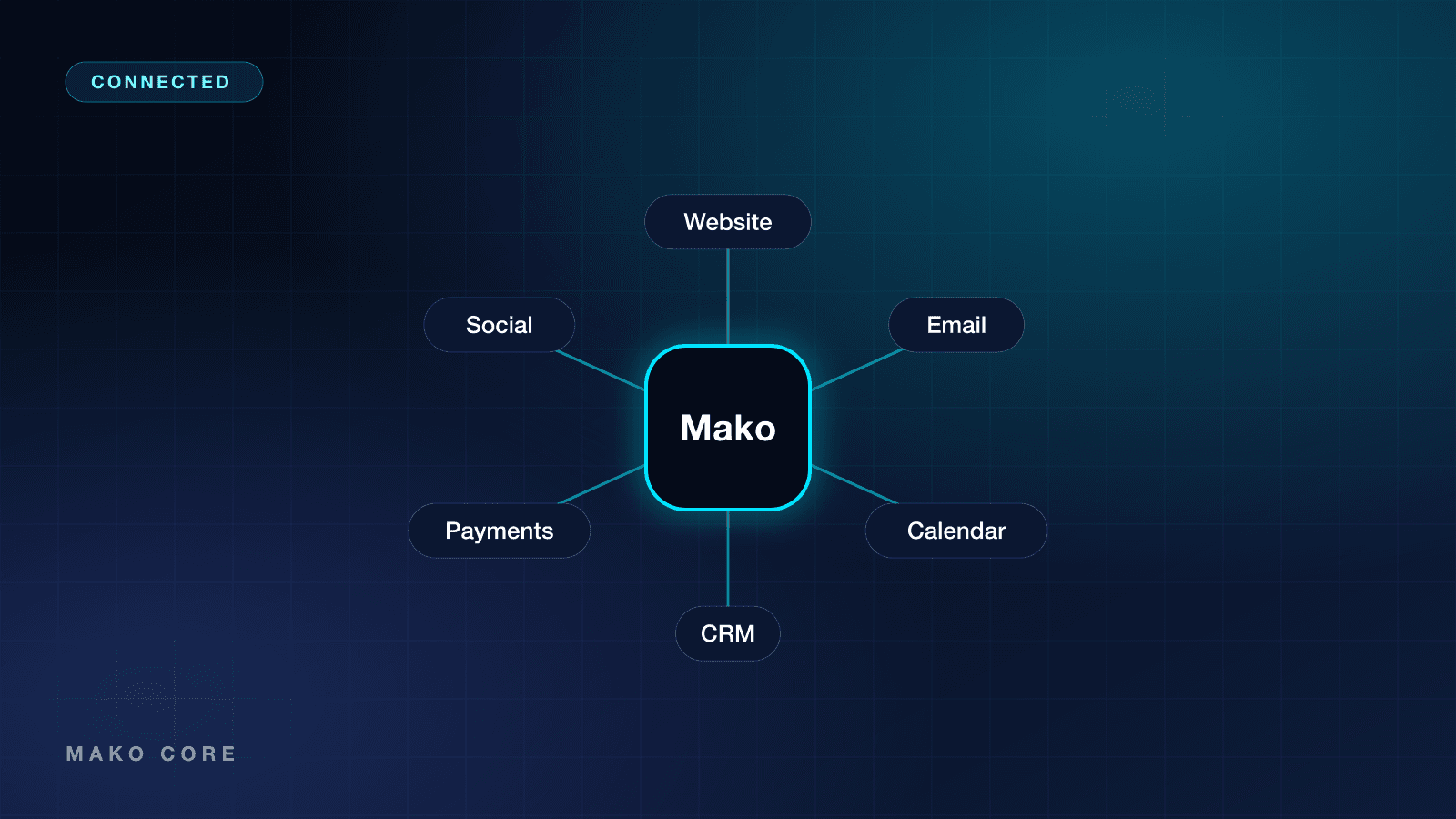
Mako is set up around the business instead. You tell us what you do, who you serve, how you operate, and where you are stuck. The system recommends what to run first. You can change it. You should not have to build it.
One loop, not a catalog
The work is the same for every company we take on: understand the business, put the highest-impact opportunities first, set up the capabilities that fit, measure whether they worked, and adapt when the market moves.
- Understand how the business actually runs.
- Prioritize the few moves that matter.
- Improve the workflow around those moves.
- Measure conversations and wins, not activity.
- Adapt as the company and the market change.
Insurance is the first live customer vertical because a real agency is running it. Other industries unlock the same way — with a business, not a landing page.